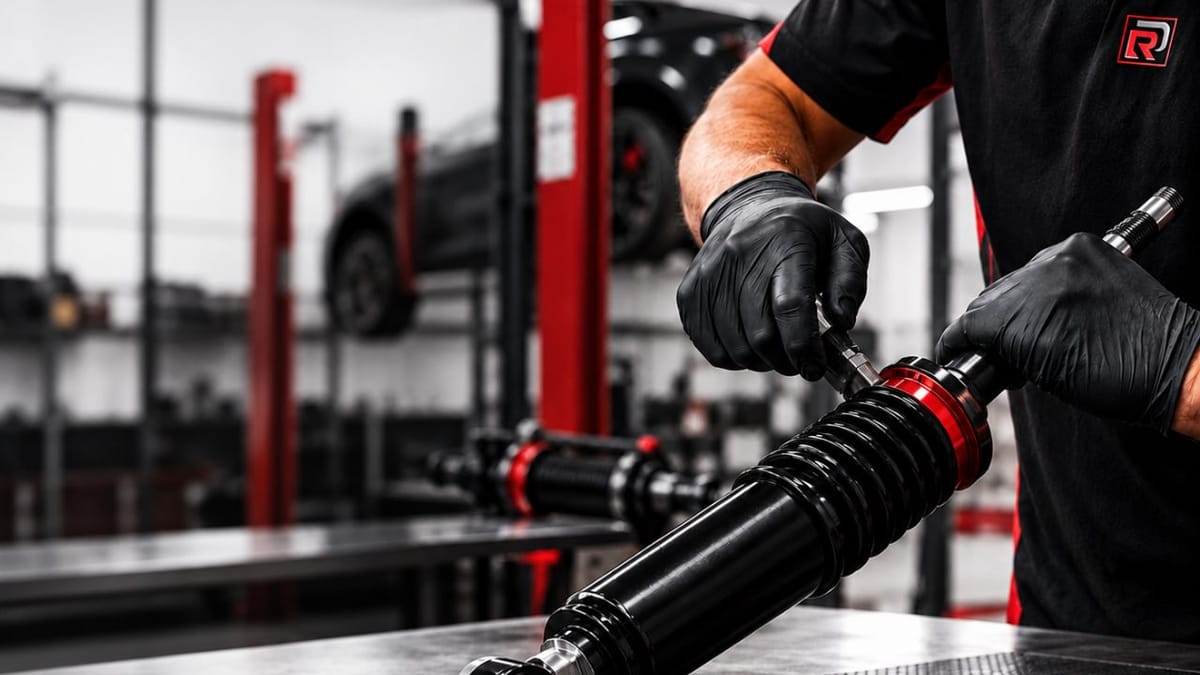
A smooth ride can hide suspension problems until the warning signs become difficult to ignore. If your vehicle feels unusually bouncy, dips when braking, sways around corners, or takes longer to settle after bumps, worn shock absorbers may be affecting its performance.
Shock absorbers control suspension movement, keep your tyres in contact with the road, and support stable handling. As they wear, you may notice changes in ride comfort, steering response, braking behaviour or tyre wear without immediately realising the underlying cause.
For UAE drivers, high temperatures, frequent speed humps, heavy traffic and long motorway runs place extra stress on suspension components. Understanding the common signs of worn shock absorbers helps you address problems earlier, maintain safer handling, and avoid unnecessary repair costs.
What Shock Absorbers Actually Do
Your springs carry the weight of the car. Your shock absorbers control what those springs do next. Every time a wheel hits a speed hump, a pothole or an expansion joint, the spring compresses and then wants to rebound. Without damping, it would keep oscillating and the tyre would skip across the surface instead of gripping it.
A shock absorber converts that suspension movement into heat by forcing hydraulic fluid through small valves inside the unit. That is why shocks matter far more than ride comfort alone. A tyre that is bouncing is a tyre that is not fully gripping, and grip is what steering, braking and stability control all depend on.
Two terms often get mixed up. A shock absorber is a damper only. A strut is a damper that also forms part of the suspension's structure and usually carries the coil spring and the steering pivot. Many modern cars use struts at the front and separate shock absorbers at the rear, which is one reason replacement costs differ between axles.
What Happens When Shock Absorbers Wear Out
Shocks rarely fail overnight. The valving and seals degrade gradually, so the car loses stability, ride comfort and precise handling a little at a time. Drivers adapt to the change without noticing it, which is exactly why worn shocks so often get discovered by a workshop rather than by the owner.
Catching the deterioration early helps prevent uneven tyre wear, compromised handling and knock on damage to other suspension parts.
8 Warning Signs of Worn Shock Absorbers
1. Excessive Bouncing After Bumps
A healthy suspension settles almost immediately after a bump or speed hump. If your vehicle keeps bouncing two or three times afterwards, the shock absorbers may no longer be controlling spring movement effectively. On UAE roads, the tell is usually a residential speed hump taken at low speed: the car should absorb it once and move on, not float and re-settle.
2. Nose Diving When Braking
If the front of the car dips sharply as you brake, worn front dampers could be contributing to reduced suspension control. Excessive nose diving shifts weight forward, unloads the rear axle and can affect balance during hard stops. It is most obvious in stop and start traffic on Sheikh Zayed Road, where you brake firmly many times in a short distance.
3. Excessive Body Roll Through Corners
Every car leans a little when cornering. Excessive swaying, a delayed settle after a lane change, or a floating feeling through roundabouts can indicate weakened dampers. Taller vehicles show it first, which is worth knowing if you are shopping for one of the best SUVs in the UAE or browsing SUVs for sale.
4. Uneven or Cupped Tyre Wear
Worn shocks let the tyre skip rather than track the surface, which can produce irregular tread wear including cupping or scalloping, a patchy pattern of high and low spots around the tyre. Uneven wear shortens tyre life and reduces grip. If a tyre shop tells you your tyres are cupping, the tyres are the symptom and the suspension is often the cause.
5. Visible Fluid Leaks on the Shock Body
Hydraulic shock absorbers rely on fluid to control movement. Oily residue, a damp film, or dust stuck to a wet patch on the shock body usually points to a failed seal. A light misting can be normal on some designs, but visible running fluid means the unit is losing its ability to damp. Have it inspected rather than assuming the leak is harmless.
6. Clunking or Knocking Over Bumps
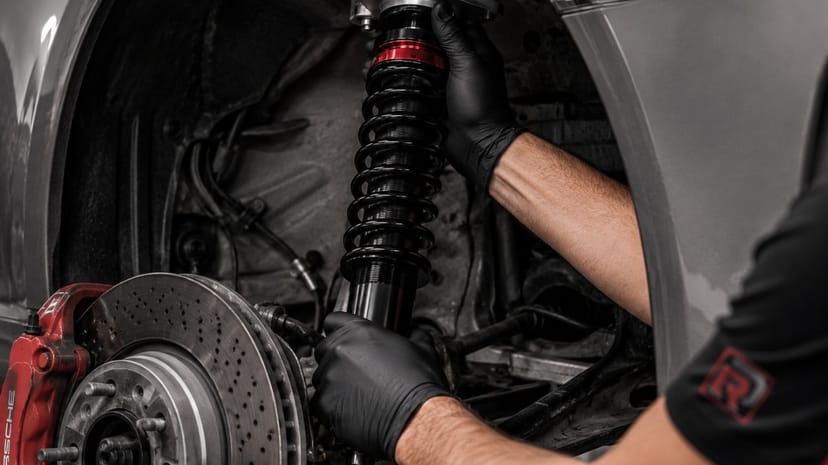
Clunking, knocking, rattling or banging over bumps should not be ignored. Those noises can come from the shock absorber itself, from its top mount and bushes, or from other suspension parts such as drop links and control arm bushes. A professional inspection identifies the actual source before a cheap bush turns into an expensive repair.
7. Longer Braking Distances
Worn shocks affect how consistently the tyres stay loaded during braking. Industry guidance has suggested that severely worn shock absorbers may increase stopping distances by up to around 20 percent in certain test conditions, although the real world effect varies with the vehicle, tyres, speed, load and road surface. Treat the figure as an indication of why this matters, not as a fixed number for your car.
8. Vague Steering and Unsettled High Speed Handling
If the steering feels less precise, the car wanders slightly in its lane, or it feels unsettled during lane changes at motorway speed, worn dampers may be part of the picture. A car that feels nervous at 120 km/h on the E11 but calm at 60 km/h deserves a suspension inspection.
The 30 Second Bounce Test You Can Do Yourself
This is a rough field check, not a substitute for a workshop inspection, but it takes almost no time:
- Park on level ground with the engine off and the handbrake on.
- Press down hard on one corner of the car, over the wheel, and release.
- Watch how the corner settles. One rebound and stop is normal. Two or more clear bounces suggests the damper on that corner is weak.
- Repeat on all four corners and compare. A corner that behaves noticeably differently from the others is the one to get checked.
Also look behind each wheel with a torch for the fluid leaks described above, and run your hand across the tread of each tyre. Tread that feels smooth in one direction and ridged in the other is a classic cupping signature.
Why These Warning Signs Matter
- Vehicle control: worn shocks reduce tyre contact with the road, which makes steering and cornering less stable.
- Braking response: weak dampers can lengthen stopping distances by allowing inconsistent tyre loading under braking.
- Tyre life: faulty shocks cause uneven wear, shortening tyre life and raising replacement costs.
- Protection for other parts: addressing worn shocks early helps prevent extra strain on springs, bushings, mounts and top plates.
- Ride comfort: healthy shock absorbers control bouncing, vibration and body movement for a calmer, less tiring drive.
- Resale value: a car that floats, clunks and wears its tyres unevenly is harder to sell. If a sale is on the horizon, read our guide on how to sell your car in Dubai before you list it.
How Often Should Shock Absorbers Be Replaced
There is no fixed replacement interval. Lifespan depends on the vehicle, driving habits, road conditions and component quality. As a general guide, have the suspension inspected from around 60,000 kilometres, with replacement often considered somewhere between 60,000 and 100,000 kilometres.
| Mileage | What to do |
|---|---|
| Under 40,000 km | No action expected. Investigate only if you notice one of the eight signs above. |
| 40,000 to 60,000 km | Ask for a visual suspension check at your regular service, especially on heavily loaded SUVs. |
| 60,000 to 100,000 km | The usual window for inspection and, on many cars, replacement. Do the bounce test yourself between services. |
| Over 100,000 km | If the original shocks are still fitted, assume they are past their best and get a professional assessment. |
For UAE drivers, regular inspection matters more than the odometer number, because heat, speed humps, traffic and uneven surfaces all accelerate wear.
Why UAE Driving Conditions Are Harder on Shock Absorbers
- High temperatures: extreme summer heat affects damper fluid viscosity and can reduce damping performance, particularly on long runs.
- Frequent speed humps: repeated impacts in residential areas and car parks place cumulative stress on shocks, mounts and bushes.
- Long motorway drives: high annual mileage between emirates means more suspension cycles per year than in many other markets.
- Dust and sand: fine particles settle around the shock shaft and can score seals over time, which is a common route to a fluid leak.
- Heavy vehicle loads: large SUVs, pickups and fully loaded family cars demand more from their dampers. Our guide to the best truck brands in the UAE covers vehicles that work hardest.
These are the same conditions that make regional specification worth understanding. If you are comparing an imported car with a locally delivered one, our breakdown of GCC specs versus American specs explains what actually changes and why it matters here.
What Shock Absorber Replacement Costs Depend On
Quotes vary widely across UAE workshops, so rather than a single figure, it is more useful to know what moves the price. Get at least two written quotes and confirm whether the price is per shock or per axle.
| Factor | Effect on cost |
|---|---|
| Struts vs plain shocks | Front struts usually cost more than rear shocks because the assembly carries the spring and often the steering pivot. |
| Part choice | Genuine OEM sits at the top, quality aftermarket in the middle, budget units at the bottom with the shortest expected life. |
| Brand and model | European luxury and performance models cost more in both parts and labour than mainstream Japanese or Korean cars. |
| Adaptive or air suspension | Electronically adjustable dampers and air struts are significantly more expensive than conventional units. |
| Related parts | Top mounts, bump stops, dust boots and drop links are often replaced at the same time and add to the bill. |
| Wheel alignment | Budget for an alignment after the work. Skipping it can undo the tyre wear you were trying to fix. |
If the repair lands at an awkward moment, it is worth weighing the cost against the car's value. Run the numbers with our car loan calculator, check what your money buys elsewhere in used cars, and compare the trade offs in our guide to buying new, buying used or renting in the UAE.
Should You Replace Shock Absorbers in Pairs?
Yes, in almost every case. Dampers on the same axle should be replaced together so that both sides behave identically. Fitting one new shock alongside an old, weak one creates an imbalance across the axle that can make the car pull, tramline or feel unpredictable during hard braking. If only one unit has failed, its partner on the same axle has done the same mileage under the same conditions and is unlikely to be far behind.
Replacing all four at once is not always necessary. If the front and rear were fitted at different times, or the rear axle is genuinely still healthy, a workshop can advise per axle after inspection.
Choosing the Right Replacement Parts
When replacing worn shock absorbers, drivers can choose genuine OEM units, quality aftermarket dampers, or professionally refurbished components, depending on the vehicle and how it is used.
| Option | Best for | Trade off |
|---|---|---|
| Genuine OEM | Cars under warranty, newer luxury models, owners who want factory ride characteristics | Highest cost |
| Quality aftermarket | Everyday driving, older cars, owners who want to restore comfort without the OEM premium | Ride feel may differ slightly from factory |
| Refurbished units | Models where new parts are scarce or very expensive, such as older air suspension | Quality depends heavily on the rebuilder |
| Budget unbranded | Rarely a good idea on a car you rely on | Short service life and unpredictable damping |
For everyday driving, RED TM aftermarket shock absorbers offer a cost effective route back to proper ride comfort, stability and handling without paying the genuine parts premium. In the UAE, drivers can source RED TM units and genuine OEM luxury vehicle shock absorbers through specialists such as European Auto Spares, which stocks OEM and quality aftermarket suspension parts for European brands and can confirm fitment against your chassis number.
Whichever route you take, check genuine customer reviews before buying online, and confirm the part number matches your exact variant. Suspension parts often differ between trim levels, wheel sizes and sports packages on the same model.
Checking the Suspension Before You Buy a Used Car
Worn shocks are one of the easiest faults to hide during a short test drive and one of the more expensive to discover afterwards. If you are shopping the used market, build the suspension into your checks:
- Do the bounce test on all four corners before you drive.
- Look for fluid on the shock bodies and uneven cupping on the tyres.
- Drive over a speed hump at low speed and listen for clunks.
- Take the car above 100 km/h on a clear stretch and note whether it tracks straight.
- Run a free VIN check to confirm the car's identity and history before you commit.
- Book an independent inspection. Our step by step guide to buying a used car in Dubai covers the full inspection and paperwork sequence.
Ready to shop? Browse the full CarsClub search, narrow by emirate with cars for sale in Dubai, set a ceiling with cars under AED 50,000, or start from our editors' picks in the best used cars to buy in the UAE. You can also compare fresh stock in new cars, step up to luxury cars, or find a dealer near you on our showroom pages.
Frequently Asked Questions
What are the main signs that my shock absorbers need replacing?
The most common signs are excessive bouncing after bumps, the nose dipping sharply under braking, extra body roll through corners, uneven or cupped tyre wear, visible fluid on the shock body, clunking noises over bumps, longer braking distances and vague steering at speed. Any one of them justifies an inspection, and several together make it urgent.
How long do shock absorbers last in the UAE?
There is no fixed interval. Many cars need inspection from around 60,000 kilometres and replacement somewhere between 60,000 and 100,000 kilometres, but UAE heat, speed humps, dust and high annual mileage can shorten that. Judge by behaviour and inspection rather than by the odometer alone.
Can I keep driving with worn shock absorbers?
The car will still move, but worn dampers reduce tyre contact with the road, which affects braking, cornering stability and control during emergency manoeuvres. They also wear your tyres unevenly, so the longer you wait, the more the repair tends to cost overall. Get the suspension inspected as soon as you notice the symptoms.
Do shock absorbers have to be replaced in pairs?
On the same axle, yes. Mixing a new damper with a worn one leaves the two sides behaving differently, which can make the car pull or feel unstable under braking. Replacing all four at once is not always required, and a workshop can advise per axle after inspecting the car.
Do worn shock absorbers really increase braking distance?
They can. Weak dampers allow the tyre to lose consistent contact with the road under braking, and industry guidance has pointed to increases of up to around 20 percent in certain test conditions. The actual effect on your car depends on the vehicle, tyres, speed, load and surface, so treat the figure as an illustration of the risk rather than a precise prediction.
What is the difference between a shock absorber and a strut?
A shock absorber only damps suspension movement. A strut does that as well, but it also forms part of the suspension's structure, usually carrying the coil spring and acting as the steering pivot. Struts are typically more expensive to replace because the assembly does more work and often requires spring compression during the job.
Are aftermarket shock absorbers as good as genuine OEM?
Quality aftermarket dampers from established manufacturers restore ride control effectively and cost less than genuine parts, which makes them a sensible choice on older cars and everyday drivers. Genuine OEM makes more sense on newer or warranty covered vehicles where matching factory ride characteristics matters. Very cheap unbranded units are the option to avoid.
Does replacing shock absorbers require a wheel alignment afterwards?
It is strongly recommended, particularly when front struts are replaced, because the work can alter camber and caster settings. Budgeting for an alignment protects the new tyres you may have just fitted and helps the car track straight.
Can worn shocks cause my car to fail its annual test?
Suspension condition forms part of the mechanical inspection at UAE testing centres, and clearly failed components such as a leaking shock absorber or a damaged mount can be flagged. Inspecting the suspension before the test is cheaper than failing it and returning.
Key Takeaways
Shock absorbers are essential to stability, handling, braking performance and tyre contact with the road. Because wear develops gradually, signs such as excessive bouncing, nose diving, uneven tyre wear, fluid leaks, unusual noises or reduced steering precision are easy to normalise and should not be overlooked.
For UAE drivers, heat, speed humps, long journeys and demanding road conditions accelerate suspension wear. If you notice any of these warning signs, replacing worn shock absorbers early helps maintain safer handling, protects your tyres, and prevents more costly suspension repairs later. A 30 second bounce test in your own parking space is the cheapest place to start.
This article is for general guidance. Vehicle specific advice should come from a qualified technician who has inspected your car. Mileage figures and performance effects are indicative and vary by vehicle, load, tyres and road conditions.