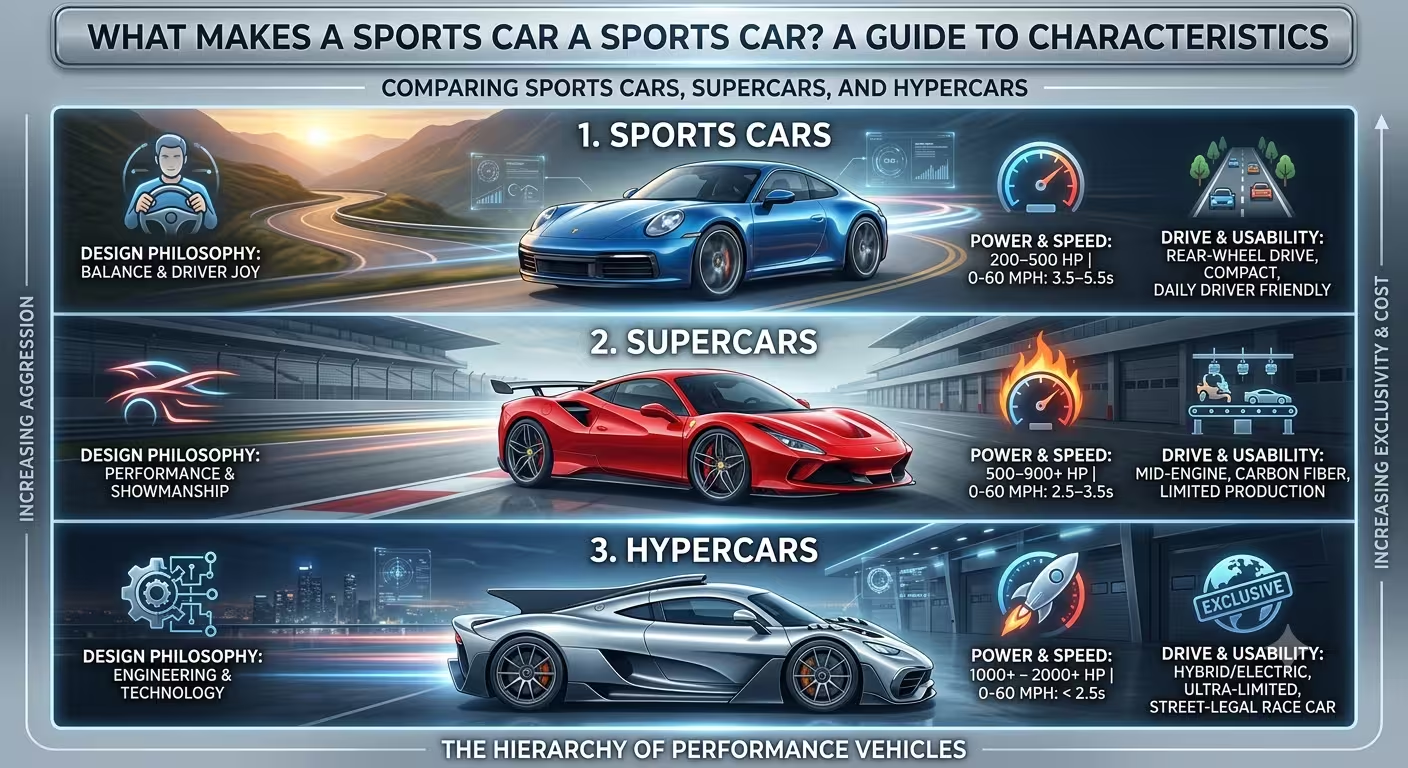
Few cars stir up as much excitement as a proper sports car. The low stance, the sculpted body and an engine built to thrill have earned them a permanent place in car culture, and in the hearts of drivers who put performance ahead of practicality. But what actually separates a real sports car from a sporty-looking sedan or a fast SUV? It is not just top speed or a flashy badge. It is a specific mix of engineering, design and driving dynamics that come together to create a genuinely engaging drive.
In this guide we break down the core characteristics of a sports car, covering design, dimensions, engine technology, handling and the interior trade-offs, so you know exactly what to look for. If browsing is more your style, you can jump straight into the luxury and performance cars for sale on CarsClub while you read.
What Is a Sports Car, Really?
At its heart, a sports car is a low-slung, performance-focused vehicle built around three priorities: fast acceleration, precise steering and an emotionally engaging drive. That is a broader definition than most people expect, and it is deliberate, because modern engineering has blurred a lot of the old boundaries. Hot hatches, sport sedans and even some crossovers now post acceleration figures that would have embarrassed a sports car a decade ago.
So body shape alone can no longer define the category. What truly sets a sports car apart is the complete package: how it is built, how it is balanced and how it reacts to your inputs. Let us walk through each defining trait in detail.
1. Aerodynamic, Purpose-Built Design
Sports cars are sculpted rather than merely styled. Almost every curve, vent and panel serves a purpose tied to airflow. Designers shape the bodywork to cut through air resistance and generate downforce, the aerodynamic pressure that pushes the car onto the road and keeps it planted at speed.
Look closely and you will usually spot:
- Front splitters that control the air passing under the car.
- Rear spoilers or active wings that add grip to the rear axle during hard cornering.
- Diffusers that tidy up the turbulent air leaving the underbody.
- Wide air intakes that feed the engine and cool the brakes.
Beyond aerodynamics, weight-saving materials shape the whole design philosophy. Carbon fibre panels, aluminium chassis parts and lightweight composites are increasingly common, letting manufacturers cut mass without giving up structural rigidity or visual drama.
2. Compact Dimensions and Low Weight
Size and weight are two of the most reliable signs of a genuine sports car. Most models sit inside a fairly tight window:
- Length: roughly 4,200 to 4,800 mm
- Width: roughly 1,800 to 2,030 mm
- Height: roughly 1,100 to 1,300 mm
That low roofline is not an accident. It drops the centre of gravity closer to the road, which sharply improves cornering stability and reduces the tendency to lean or roll through hard turns.
Weight matters just as much. Sports cars usually weigh between 1,100 kg and 1,600 kg, noticeably lighter than the average sedan, which often lands between 1,300 kg and 2,000 kg. Every kilogram saved improves the power-to-weight ratio, which in turn sharpens acceleration, braking and overall agility. This is why makers shave grams from everything: seats, wheels, even sound insulation.
3. High-Output Engines and Performance Drivetrains
Ask most enthusiasts what makes a sports car, and the engine is usually the first answer. Power in mainstream performance models generally ranges from around 300 hp to 700 hp, though limited-run hypercars go far beyond that. A few extreme, record-chasing machines have even crossed the 5,000 hp mark using multi-turbocharged, large-displacement engines.
V-type layouts (V6, V8, V10 and V12) stay especially popular because they balance compact packaging with strong power delivery, while producing the distinctive engine notes fans love. If low running costs matter more to you, note that performance EVs now deliver supercar-level acceleration through instant electric torque instead.
Drivetrain choice matters as much as raw output. Most sports cars use one of two layouts:
- Rear-wheel drive (RWD): favoured for its balanced weight distribution and a more engaging, driver-focused character.
- All-wheel drive (AWD): favoured for maximising traction and putting power down cleanly, especially in high-horsepower cars.
Both are chosen to optimise acceleration, cornering grip and stability under hard driving. Browse the current new performance cars on CarsClub and you will see both layouts well represented.
4. Precision Handling and Stability Systems
A sports car shows its real personality the moment you turn the wheel. Handling and stability come from a tightly integrated system of suspension tuning, weight distribution and electronic controls all working together in real time.
Many performance-focused models use a mid-engine layout, placing the engine near the centre of the car rather than up front. That improves the balance between the front and rear axles, giving more predictable, neutral handling, which is a real advantage when you are pushing through fast corners.
Suspension is usually firmer than in everyday cars, and increasingly adaptive or active, adjusting damping stiffness automatically based on the road and the driving mode. This keeps body roll in check and keeps the tyres in consistent contact with the surface.
On top of the mechanical setup sits a suite of electronic aids: traction control, stability management and torque vectoring. These constantly watch wheel slip and yaw, then adjust power and braking at individual wheels to help you stay in control without smothering the experience.
5. Compact Cabins and Limited Practicality
Performance always comes with trade-offs, and interior space is usually the first thing sacrificed. Traditional sports cars, especially coupes and roadsters, are built around two seats. Where rear seats exist at all, legroom is often minimal, typically in the 29 to 33 inch range, which suits children or short trips at best.
Boot space follows the same pattern. Most sports cars offer somewhere between 170 and 340 litres of cargo room, compared with the 450 to 550 litres of a typical mid-size sedan. Compact dimensions and mid-engine layouts both eat into storage, but this is a deliberate choice, not a flaw. Less bulk and lower mass translate directly into a better power-to-weight ratio and sharper behaviour on the road.
It is worth noting that sports SUVs and grand tourers break from this pattern, blending performance with everyday usability, extra seats and more generous storage. If daily practicality matters to you, these are worth weighing alongside the traditional two-seaters. Our guide to the best SUVs in the UAE is a good place to start, and you can filter straight to SUVs for sale in the UAE.
Sports Car vs Supercar: What Is the Difference?
The terms are often used interchangeably, but they are not the same thing. Sports cars deliver strong, engaging performance while still being usable for regular driving. Supercars sit a tier above, with more extreme power, cutting-edge engineering, higher prices and far more exclusivity. Every supercar could fairly be called a sports car, but not every sports car qualifies as a supercar. If you want the supercar experience without the ownership costs, our guide to renting a supercar in Dubai covers your options.
Why These Traits Matter When You Buy in the UAE
Understanding these characteristics is not just trivia. It shapes your buying decision directly. A lighter, RWD sports car with stiff suspension feels razor-sharp on a track day but can ride firm on the daily commute across Dubai or Abu Dhabi. An AWD model may trade a little raw connection for better traction and all-round usability. Boot space and rear-seat limits matter enormously if you plan to use the car beyond weekend drives.
Weigh these traits against your real lifestyle: your commute, your storage needs, the summer heat, and how often you will actually push the car hard. A few practical steps for UAE buyers:
- Set a realistic budget and, if you are financing, check the true monthly cost with our car loan calculator.
- Browse the market by budget, for example performance and sports cars under AED 50,000, or explore the full used car listings.
- Before you commit to any pre-owned performance car, run a free VIN check to confirm its history and specs.
Do that, and you will land on the right model for you rather than just the most exciting one on paper.
Frequently Asked Questions
What factors define a sports car?
A sports car is defined first by its performance focus: quick acceleration, sharp handling and balanced weight distribution, backed up by aerodynamic design, a performance drivetrain and firmly tuned suspension. Body shape alone does not make a car a sports car.
How does the power-to-weight ratio affect performance?
The power-to-weight ratio is how much mass each unit of power has to move. A higher ratio, from either more power or less weight, means faster acceleration and quicker response to your inputs, without dulling braking or cornering precision. It is why manufacturers obsess over saving weight.
Does body style alone make a car a sports car?
Not really. Coupe and roadster shapes are common, but the true defining factors are the performance engineering, aerodynamics and driver engagement underneath the styling, not the silhouette on its own.
Is a supercar just a faster sports car?
Broadly yes. A supercar is a more extreme, more exclusive evolution of the sports car, with much higher power, cutting-edge engineering and a far steeper price. Every supercar is a sports car, but not every sports car is a supercar.
Are sports cars practical for daily driving in the UAE?
Traditional two-seat sports cars trade cabin and boot space for performance, so they are less practical day to day. If you want the thrill with more room, a sports SUV or a grand tourer is a better everyday compromise for UAE roads and family use.
Final Thoughts
A true sports car is the sum of many carefully engineered parts: an aerodynamic, lightweight body, a powerful and well-matched drivetrain, suspension and electronics tuned for precision, and a cabin that trades space for speed. Together they create a driving experience that is about far more than numbers on a spec sheet. It is about the connection between driver, machine and road. Whether you are shopping for your first performance car or comparing options before an upgrade, understanding these fundamentals will help you choose a car that truly delivers the experience you are after. When you are ready, explore the latest sports and luxury cars for sale or start a wider search on CarsClub.